
Article: How to Create a Calm, Layered Living Room
How to Create a Calm, Layered Living Room
A calm living room should feel comfortable, warm and quietly considered. It is the space where you relax, gather, read, watch, host and unwind, so the best living rooms balance softness with structure and practicality with beautiful detail.
Creating a layered living room is not about filling the space with more. It is about choosing pieces that work together: timeless furniture, tactile textiles, natural materials, soft lighting and decorative accents that bring depth without making the room feel busy.
Here are simple ways to create a calm, layered living room that feels relaxed, personal and beautifully finished.
Start with timeless living room furniture
The foundation of a calm living room is well-chosen furniture. Sofas, armchairs, coffee tables, side tables and storage pieces create the structure of the room, so it is worth choosing designs that feel timeless rather than trend-led.
Look for natural materials, warm wood tones, simple silhouettes and pieces that will sit comfortably with different textures over time. A coffee table or side table can help anchor the room, while storage baskets, cabinets or console tables keep everyday items organised and out of sight.
The aim is to create a room that feels easy to live in, not overly styled.
Use a soft, natural colour palette
A calm living room often begins with a gentle colour palette. Warm neutrals, oat, sand, stone, taupe, soft white, warm grey and muted earthy tones all help create a relaxed backdrop.
This does not mean the room has to feel plain. A neutral palette works best when it includes variation in texture and tone. Pair linen with rattan, smooth ceramics with rustic wood, soft cotton with stone or marble, and woven baskets with cushions and throws.
These subtle contrasts give the room depth while keeping the overall feeling calm.
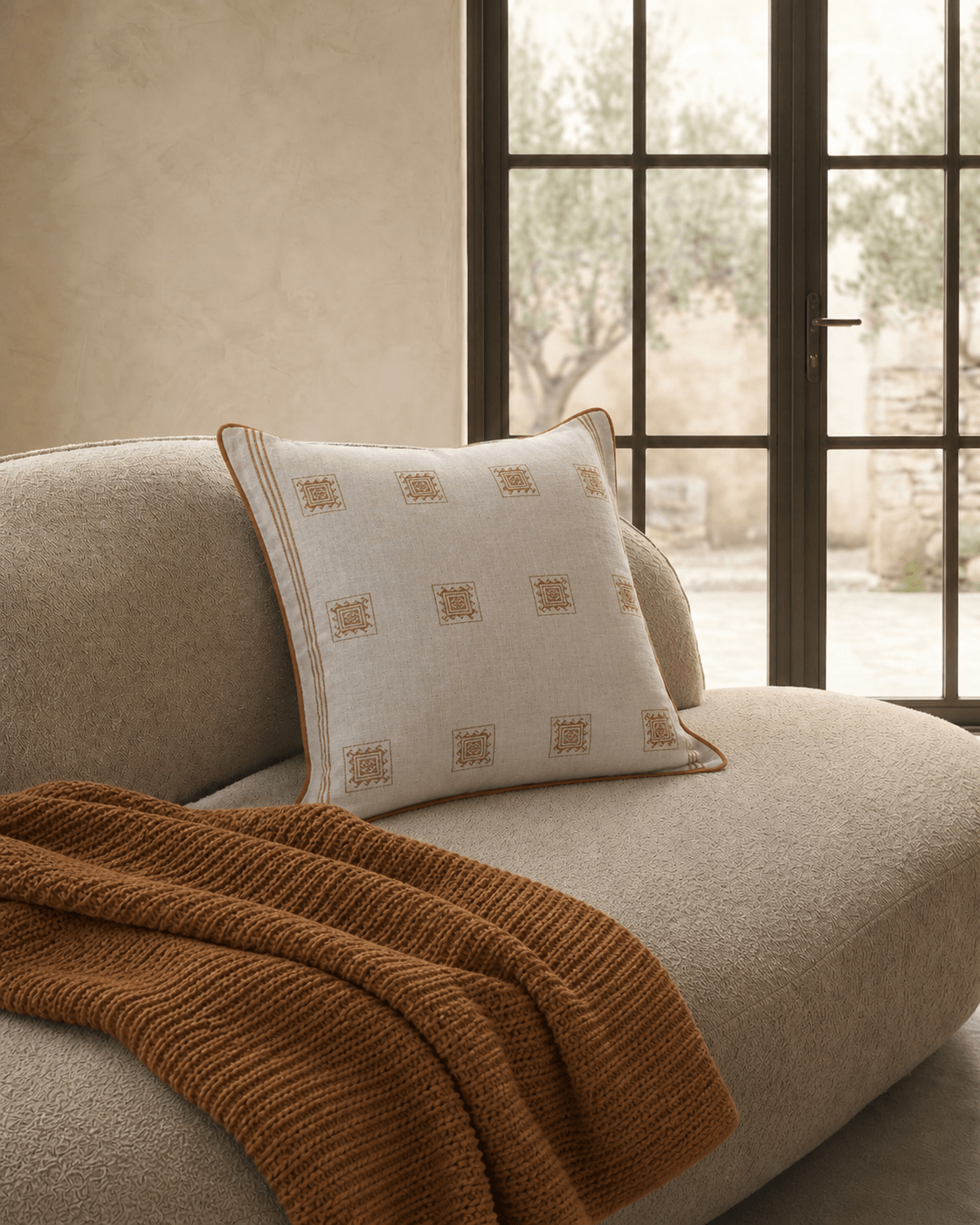
Layer cushions, throws and rugs for softness
Soft furnishings are one of the easiest ways to make a living room feel more inviting. Cushions, throws and rugs add comfort, warmth and texture, especially if the room has hard flooring, simple furniture or a neutral scheme.
Mix different textures rather than too many colours. For example, combine linen cushions with boucle, cotton, wool or woven finishes. Add a throw over a sofa or armchair to soften the shape and make the space feel more relaxed.
A rug can also help define the seating area and make the room feel more grounded, especially in open-plan spaces.
Bring in natural textures
Natural materials are key to a layered living room. Rattan, wood, jute, linen, cotton, stone, marble and ceramic all bring warmth and character without overpowering the space.
Rattan baskets are useful for storage, but they also add texture and softness. Trays can help organise coffee tables or sideboards. Ceramic vases, stone bowls and wooden decorative pieces add quiet interest while keeping the room feeling natural and considered.
The best layered rooms include a mix of materials that feel collected over time.
Add practical storage that still looks beautiful
A calm living room needs practical storage. Without it, even the most beautifully styled room can quickly feel cluttered.
Use baskets for blankets, magazines, children’s toys, logs or everyday items you want close to hand. Trays can gather smaller pieces such as candles, matches, coasters or decorative objects. Cabinets, sideboards and console tables can help hide less attractive essentials.
The key is to choose storage that feels part of the design, not an afterthought.
Style your coffee table with restraint
A coffee table is often the centre of the living room, so it is a good place to create a small, considered styling moment.
Start with a tray, bowl or stack of books to give the arrangement structure. Add one or two decorative pieces, such as a vase, candle, ceramic object or small plant. Leave enough empty space so the table still feels useful.
A calm living room should never feel too precious. The styling should make the space feel finished, but still easy to use every day.
Use lighting to soften the room
Lighting has a huge effect on how calm a living room feels. Instead of relying only on one overhead light, layer different types of lighting around the room.
Table lamps, floor lamps and wall lights create a softer atmosphere, especially in the evening. Lampshades made from linen, rattan or natural fibres can add warmth and texture as well as light.
Think of lighting as part of the room’s styling, not just a practical detail.
Add decorative accessories with intention
Decorative accessories bring personality to a living room, but they work best when they are chosen carefully. Vases, bowls, candle holders, mirrors, wall decor, books and sculptural objects can all help a room feel finished.
Rather than adding lots of small pieces, choose fewer items with stronger texture, shape or material quality. A large ceramic vase, a marble bowl or a woven tray can make more impact than several small accessories.
This keeps the room feeling layered but not cluttered.
Keep the room calm, not empty
A calm living room does not have to be minimal. In fact, the most inviting rooms often include plenty of texture, softness and detail. The difference is that every piece feels considered.
Use furniture to create structure, textiles to add comfort, natural materials to bring warmth, and decorative accessories to add personality. When these layers work together, the room feels relaxed, balanced and easy to live in.
Final thoughts
Creating a calm, layered living room is about building the space slowly and thoughtfully. Start with timeless furniture, then add softness through cushions, throws and rugs. Bring in natural materials such as rattan, wood, linen, stone and ceramic, and use baskets, trays, lighting and decorative accessories to finish the room with warmth and character.
The result is a living room that feels comfortable, considered and beautifully lived in.

Leave a comment
This site is protected by hCaptcha and the hCaptcha Privacy Policy and Terms of Service apply.